


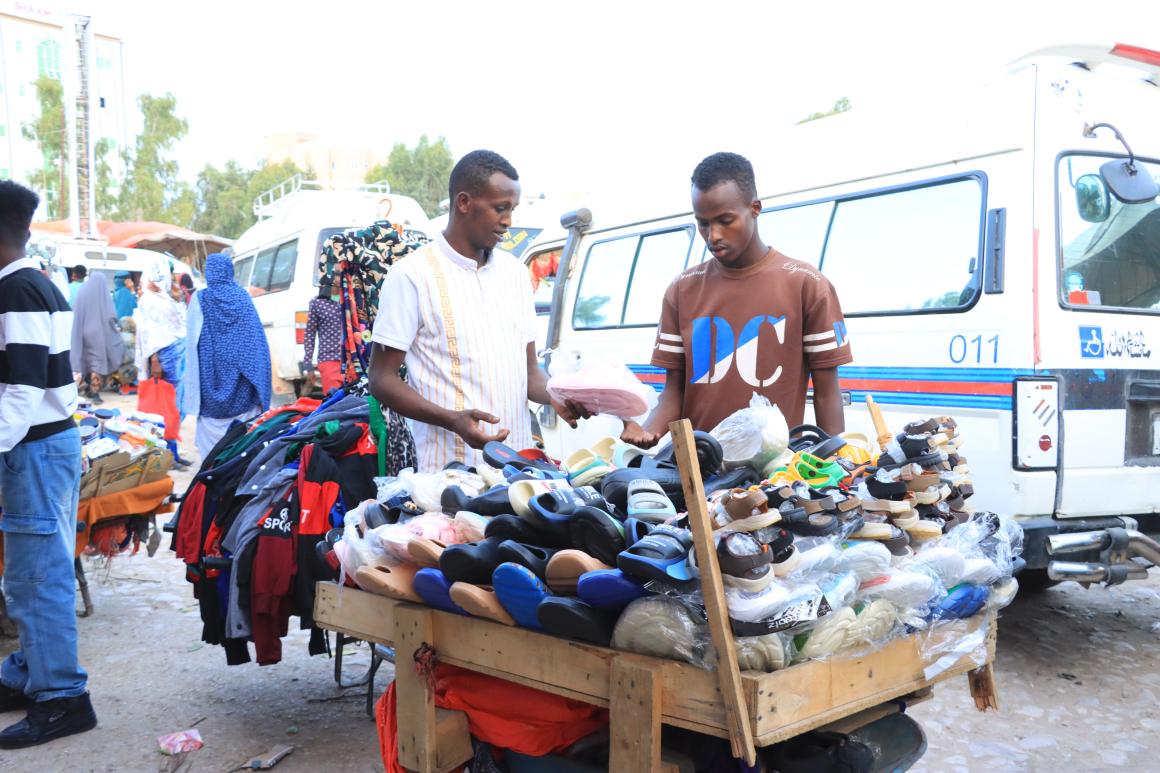
Hargeisa – It is a sweltering day in Hargeisa’s bustling Waheen Market and Aadan Yusuf Jama stands by his mobile business – a wheelbarrow loaded with clothes and shoes for sale.
A big smile on his face, the 24-year-old ignores the scorching heat and calls on passers-by to buy his goods at the largest market in Somaliland.
“I do not have much money yet, as my business is still new,” he says, “but I am incredibly happy. There is no place like home, no matter where you go in the world. It is like the saying, ‘Haybad waxaad ku leedahay dhulkaaga hooyo.’” [transl.: You can have dignity only in your homeland].
The smile on Mr. Jama’s does not solely stem from the prospect of new sales – rather, it also derives from the recent experiences that led to him to this new stage of his life.
Just a year and half ago, he was enduring various setbacks and misfortunes across North Africa as he tried to reach Europe in the hope of finding work to support his family.
Early challenges
Mr. Jama was born in 2001 in Ali Aadan, a rural area in the Sabowanaag district, about 30 kilometres southeast of Hargeisa in Somaliland. The youngest of 11 siblings – four sisters and six brothers – he was raised in a household of modest means, which meant he could not pursue formal education and received only basic Quranic teaching.
He spent his early years in the countryside before his family moved to Hargeisa when he was nine, in the hope of escaping the hardships of a rural life marked by frequent droughts and a lack of livelihood options.
Eventually, Mr. Jama’s father opened a small restaurant which became the family’s main source of income.
But when Mr. Jama was 14, his father passed away. Orphaned and expected to contribute to the family’s finances, he aspired to become an entrepreneur.
He started by looking for menial jobs at the Waheen Market, and eventually found a job at a tailoring shop.

After a while, using his new tailoring skills, he opened a small business making and selling women’s clothes. But, lacking funds, Mr. Jama had a hard time making the venture viable.
“It is difficult to start a business in Somaliland without financial backing or access to loans. Financial institutions here lend money only to those who are already financially stable. Poor people have no access to such loans,” he says. “As the Somali proverb goes, 'Soomaalidu ninkii wax haysta ayay wax ugu daraan.'” [transl.: Somalis give financial support only to the well-off]
Frustrated with his unprofitable clothing business, Mr. Jama became an apprentice in garages owned by relatives and acquaintances. He acquired enough skills to make a living out of his new employment as a mechanic and driver.
“I saved a good amount of money and considered investing it in a business, but then I got married, and all the money was spent quickly,” he says, smiling. “I was able to support my wife and child and lived a relatively decent life. But it did not allow me to save for future progress.”
Perilous journey
One day in 2022, a phone call from a friend who was abroad changed his life.
The friend, who had worked with him as a mechanic, sent news and photos from his successful migration to Europe. Curious, Mr. Jama inquired about following his friend’s example and got connected with a man who promised to help.
“He [the man] immediately called me via WhatsApp. He said he would take me to Libya and that I would not need to pay until I reached there,” he recalls.
Thinking back to that phone call, Mr. Jama has regrets.
“It was the worst phone call of my life, leading me to endure hell on earth for a year and a half, and ruining the assets my parents had built over decades,” he says. “To be honest, I can’t blame poverty alone – my ambitious plans also contributed.”
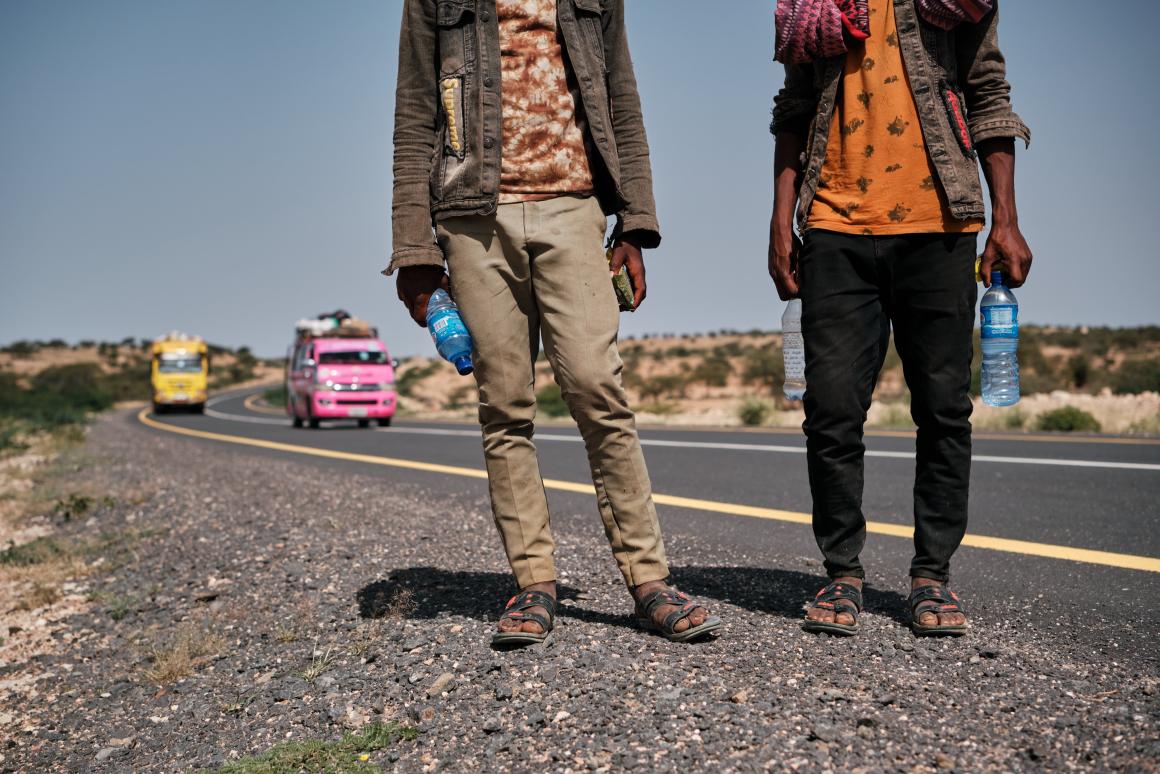
Starting a difficult 16-day journey a month after that fateful call, Mr. Jama travelled from Ethiopia through the Nubian Desert in northeastern Sudan to Libya.
He endured extreme conditions with inadequate food and water, and faced constant danger from speeding vehicles sharing the road with the pick-up truck he was transported in.
Libyan wait
Along with other Somalis in his transport, the then-21-year-old Mr. Jama eventually reached Libya.
But his arrival did not mean an end to his hardship.
“I hate to remember what I went through. It was unimaginably grueling. I wanted to change my life, but life changed me negatively,” he says.
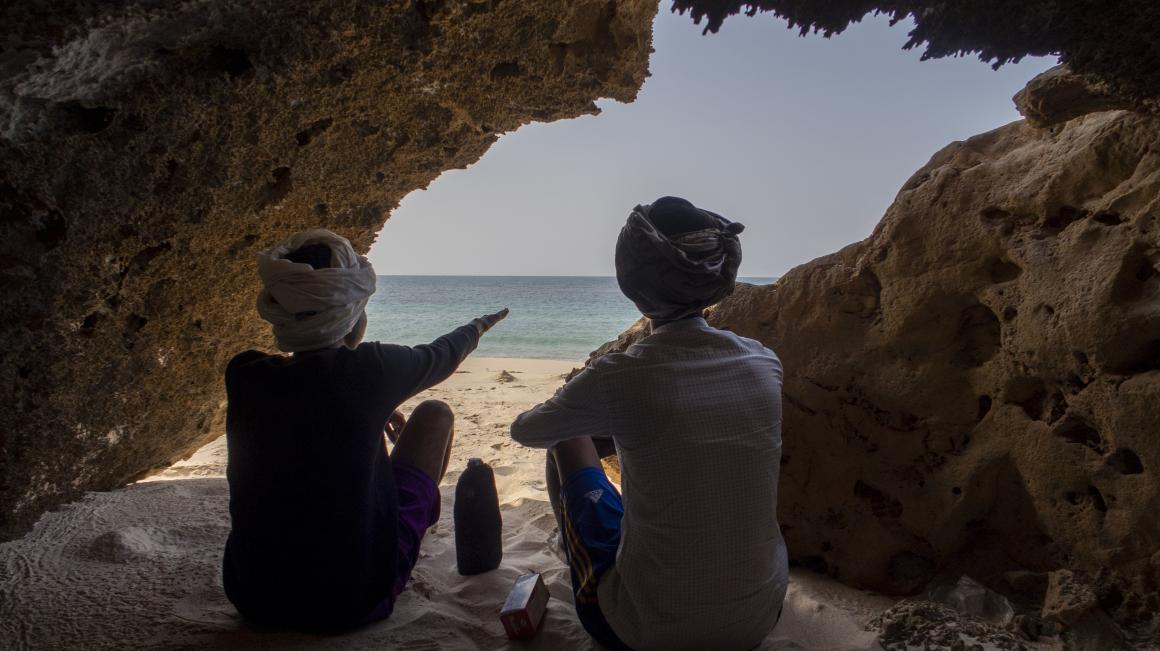
Over the subsequent 16 months he spent in Libya he endured hunger, torture, beatings, psychological abuse, imprisonment and the constant threat of death, with the latter including almost drowning in the Mediterranean and being shot by unknown gunmen.
Initially, he was placed in a hidden staging camp run by migration brokers known as “magafe,” for whom beating the irregular immigrants was a regular pastime.
With his daily diet limited to a measly serving of bread and water, Mr. Jama suffered from malnutrition and became so weak that he could hardly move.
It was then that he was presented with the price tag for his journey – $15,000 – an amount that Mr. Jama did not possess.
“I had no money when I migrated and left nothing for my wife and daughter. I thought the trip would take only a month. That was poor judgement on my part,” he says.
“To make matters worse, they would call my mother almost daily,” he says. “They let her hear my cries during beatings and threatened her, saying they would take my life and throw my body to animals if she failed to send $15,000 urgently. And they meant it. I know many inmates who died after their families failed to send the money.”
His family ended up selling all of its possessions, including farming plots and livestock, to gather the money required by the brokers. Overall, they spent more than $19,000 in his attempt to reach Europe – on top of the $15,000 fee, there was an additional $4,000 required for other costs incurred during his time in North Africa.
While in Libya, Mr. Jama made three attempts to reach Italy.
“Anyone who migrates faces problems, but it seemed that I faced more than others. I went on a boat three times, and each time it sank near Libyan waters. Some of us were rescued and returned to Libya, while others drowned. I escaped from illegal migration camps in Tripoli twice but was apprehended both times and returned to the same camp once and, the second time, to a police station,” he says.
“I even narrowly escaped being shot by a gunman. I learned that the migration brokers and the police were collaborators,” he adds.
UN support
While in the police station, he requested that the police to contact United Nations agencies to support his voluntary return to Hargeisa.
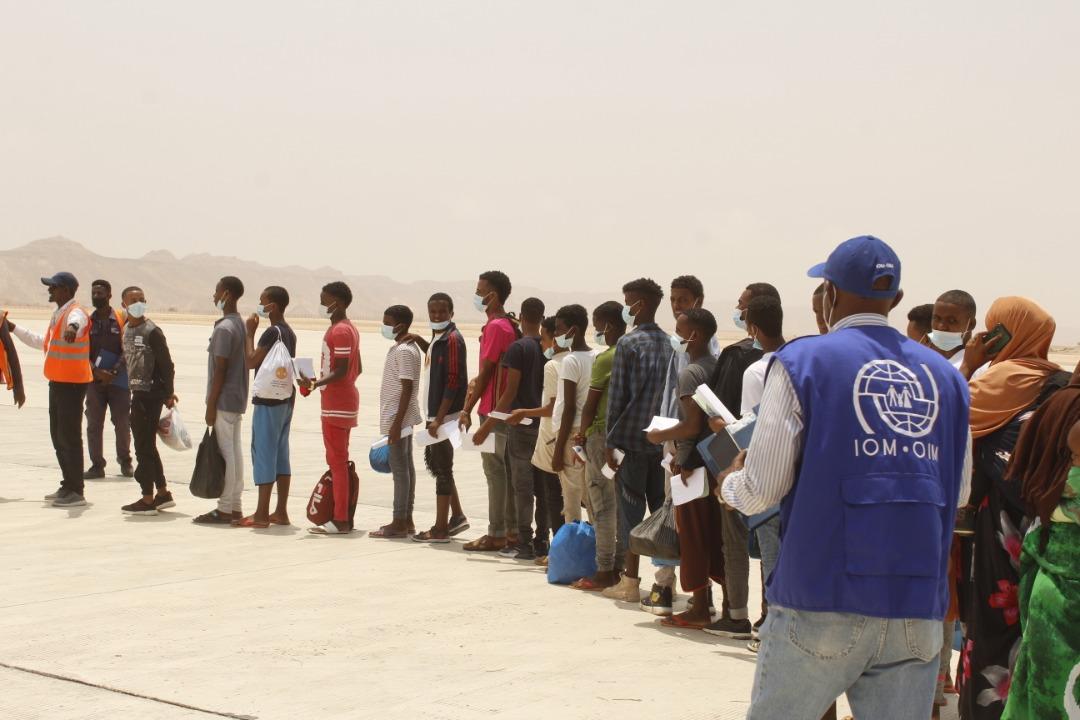
“I had given up on life, but then I was visited in prison by officers from the International Organization for Migration (IOM) and diplomats from the Embassy of Somalia in Tripoli. I was overjoyed and requested voluntary repatriation. They sent me back home, and I was reunited with my wife and daughter,” he says.
Along with another 89 young migrants, Mr. Jama benefited from the European Union and IOM’s Joint Initiative for Migrant Protection and Reintegration.
Launched in December 2016 with funding from the European Union’s Emergency Trust Fund for Africa, the Joint Initiative for Migrant Protection and Reintegration is a comprehensive programme to save lives, protect and assist migrants along key migration routes in Africa.
The programme enables migrants who decide to return to their countries of origin to do so in a safe and dignified way, in full respect of international human rights standards and. In Somaliland, it is carried out in collaboration with local displacement authorities and the Office of the United Nations High Commissioner for Refugees (UNHCR).
Over the last two decades, irregular migration has become a common phenomenon in Somaliland, where more than 70 per cent of the population is under the age of 35. Exceptionally high unemployment rates – up to 70 per cent of urban population – drive many youths to risk their lives for a new, more auspicious beginning through ‘tahriib,’ as the perilous journey that young Somalis undertake is commonly known.
On their journeys, many of them are unable or unwilling to remain in host or transit countries and wish to return voluntarily to their places of origin. In Somaliland, since 2018, IOM in collaboration with others, has provided administrative, logistical and financial support to 5,056 people for their safe and dignified return and reintegration.
New dreams
Mr. Jama finally returned to Hargeisa in January 2024 to his family’s welcome embrace. But the challenge of providing for his family remained.
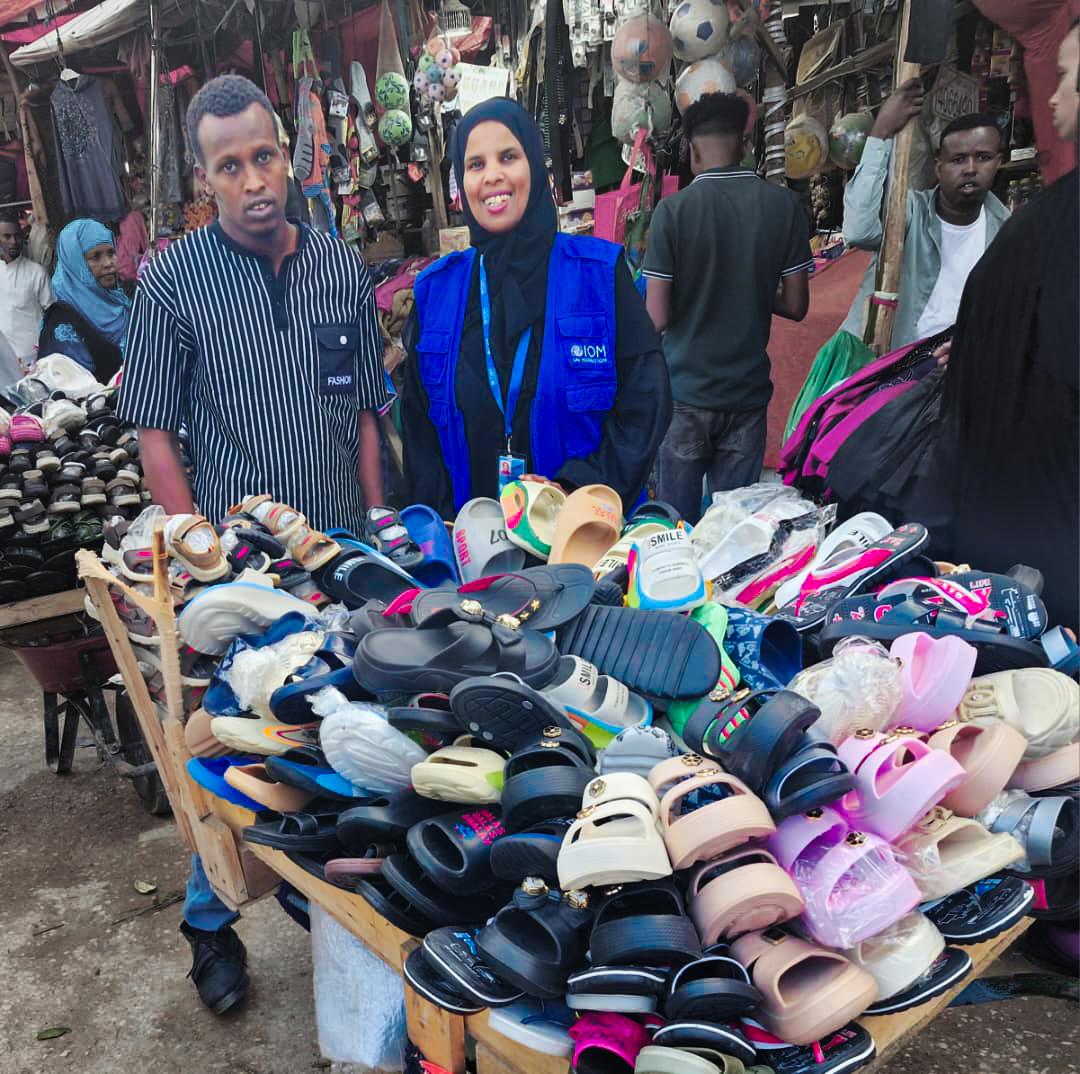
That also changed thanks to IOM, with the UN’s migration agency providing a business grant of $1,280 which led to Mr. Jama starting his current business venture last year.
"Although the grant was for $1,280, to me it is worth tens of thousands of dollars because it revived my dream of becoming an entrepreneur. For the first time in ages, I feel hopeful about building a successful business,” he says. “IOM helped me restart my life and rekindle my ambition to become an entrepreneur. I don’t know how to thank them."
Mr. Jama’s Case Manager at IOM, Faisa Barre Ahmed, has high hopes for the budding entrepreneur.
"In my brief interaction with Aadan, I found him to be resilient, open-minded and optimistic. Whenever you see him, he's energetic, busy and smiling,” she says. “He has positive entrepreneurship characteristics and I'm confident that he will be able to grow his business and make his dreams come true.”
Mr. Jama’s new business brings in about $10 a day. It is a starting point he is grateful for and plans to build on for his future – a future which he sees centred in his home turf and not abroad.
“Never again - even if I received an official invitation from European governments. My message to the youth in Somaliland is that they should never consider migrating,” he says. “There is no better life than the one you have in your own homeland. It is better to face hardship where you are than to risk your life at sea. There is no good reason to risk your life in dangerous migration attempts.”


