


In UN peacekeeping, the protection of civilians is perhaps more commonly exemplified by a conventional kind of security—standing guard, patrols, robust military postures. But this all-important task is, in fact, a versatile affair, oftentimes drawing from the diverse skillset of UN blue helmets – civilian, police and military alike – to also provide human security to vulnerable populations through civil-military activities.
Every so often, the intersection of these intertwined worlds is laid bare, as was the case in Koui and Sanguere-Lim, in the north-west of the Central African Republic (CAR), where peacekeepers from the Bangladesh Battalion, the Peruvian Engineering Company, and the Senegalese Quick Reaction Force of MINUSCA, whilst securing recent disarmament and demobilization operations, were also lending a hand to education, health and reconciliation in the CAR.
Like many other basic rights, access to health, education, and protection from harm have long been compromised by recurrent conflict in parts of the CAR. Reason for MINUSCA to conduct community support initiatives to strengthen civilian protection on the margins of disarmament operations, under the umbrella of the Mission’s Civil-Military Cooperation (CIMIC) activities.
What’s in a civil-military activity?
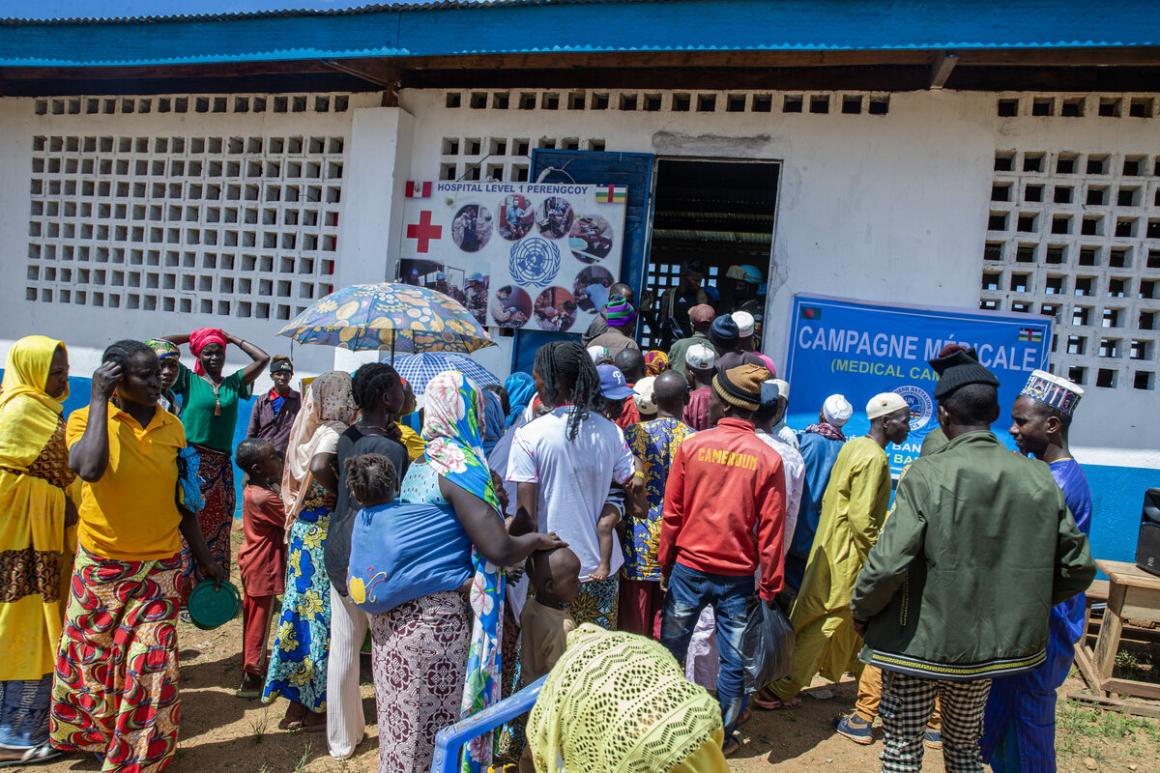
For the residents of Koui and Sanguere-Lim, in Ouham-Pendé Prefecture, the CIMIC activities conducted by the MINUSCA integrated team brought an array of medical expertise to their doorstep, including a general practitioner, gynecologist, neurologist, and a nephrologist. For schoolchildren, they provided an abundance of much-needed scholastic materials at the start of the school year. For newly disarmed Retour, réclamation et réhabilitation (3R) ex-combatants and the host communities to which they have returned, they opened a pathway for mutual acceptance through sport.
“When I heard that MINUSCA was going to organize a medical campaign, I quickly made my way here.Since MINUSCA arrived, we have always been given good medicine. I am happy that you have come back to take care of us. I am unwell, and so are my children. We’ve all been given medication, and I’ll make sure we all follow the treatment plan,” said mother-of-fourHanifatou Amadou.
Like many other expectant faces waiting in line, she had brought her family to take advantage of consultations conducted by the MINUSCA Force Joint Medical Team – for free – working in tandem with local Koui Hospital staff.
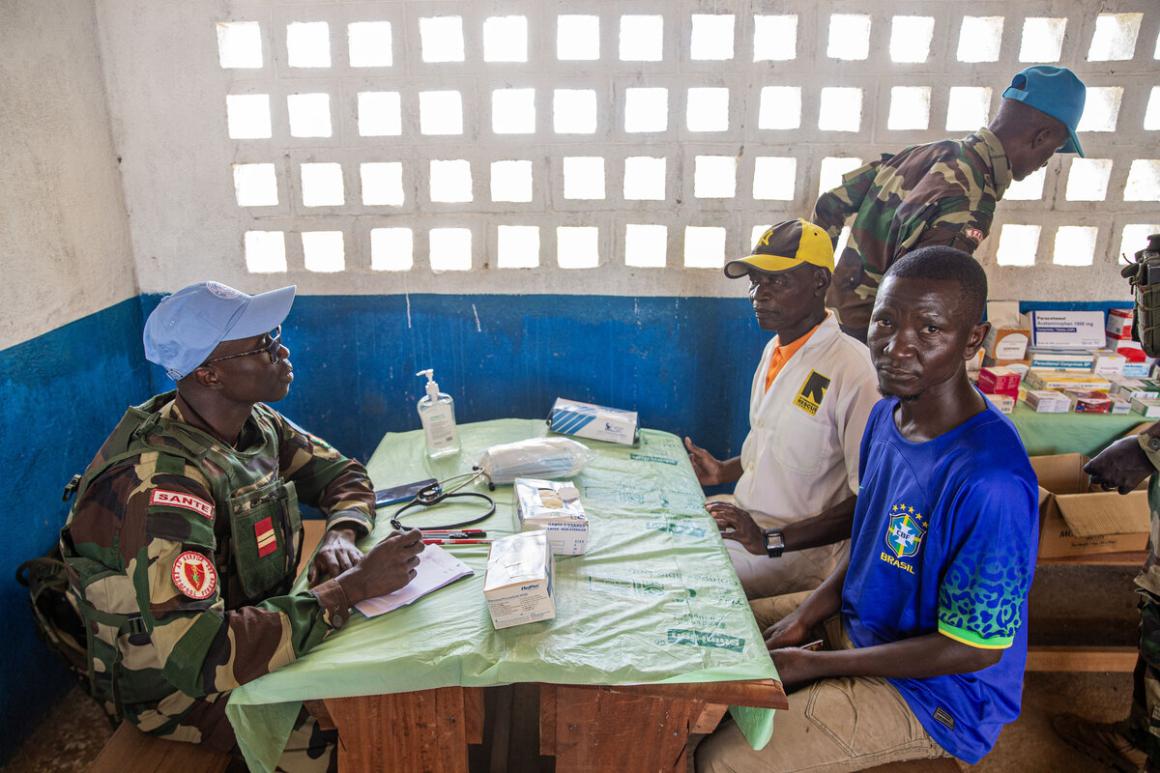
“These activities are important as they enable us to help people improve their health, especially those who have difficulty accessing health care,” noted Dr. Moustapha Seye of the MINUSCA Senegalese Quick Reaction Force. In fact, the most common ailments treated on the day – malaria, eye and dental problems, skin infections, headaches, body pain and malnutrition – seemed to suggest that for many patients braving the long queues to see the doctors, access to health care was perhaps not a matter of course.
The medical campaign attracted a diverse, sizeable crowd – among them, newly disarmed ex-combatants from the3R armed group, local authorities, and members of the local population. “I was demobilized at the end of June and fell ill while awaiting socio-economic reintegration. Thanks to the MINUSCA medical campaign, I got tested. The doctors told me that I have malaria and gave me some medicine,” said 21-year-old Amadou.
The compound effect
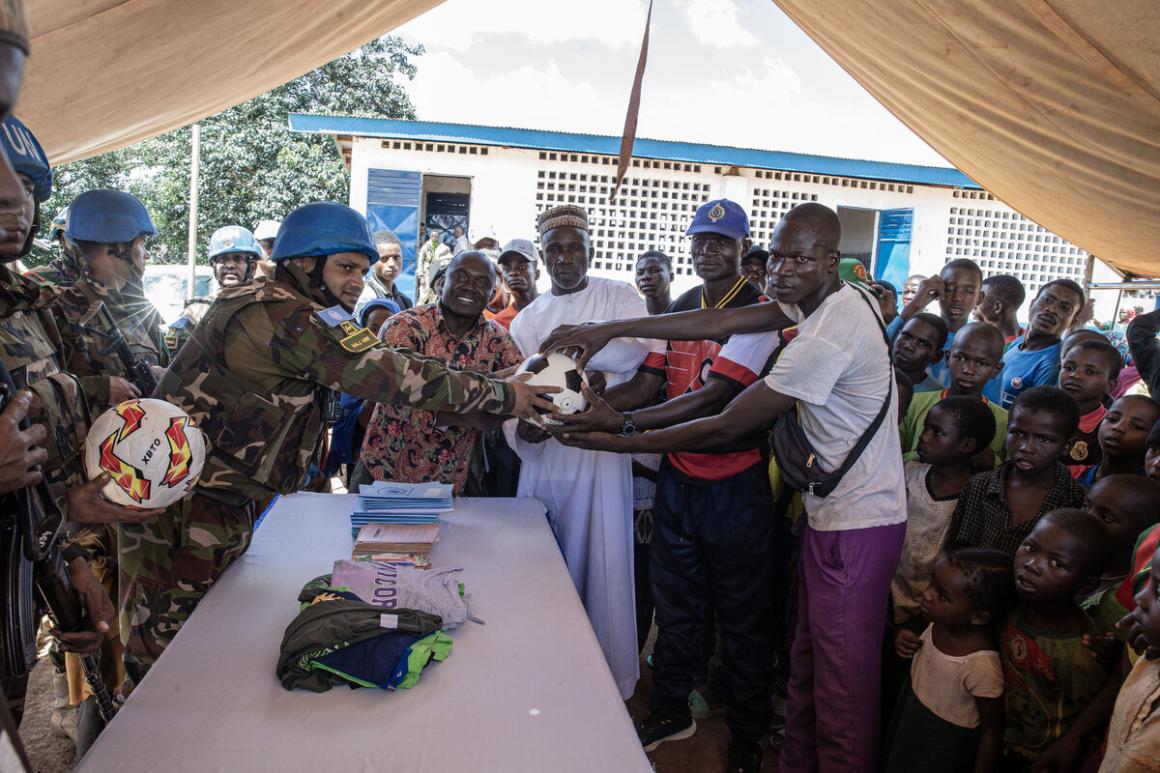
To promote reconciliation and social cohesion, a football match was organized between ex-combatants and the local Koui Football Club, and a joint MINUSCA and national Disarmament Commission team, leveraging sports as a protection tool to build trust and strengthen bonds between ex-combatants, local authorities, and the wider community.
“It is our second time coming to this area. We receive many patients every time we come here,” noted Major Tahmeed, a medical doctor from the MINUSCA Bangladesh continent, which has conducted more than a dozen CIMIC activities in several localities across north-western CAR, including in Beloko, Bouar, Ngoutéré, and Nzoro since they were deployed to the region earlier this year. “We not only offer medical care but also provide psychological support. For some patients, this may be their first time seeing a specialist but even for us, there are limitations on what we can do. We cannot change everything, but we can show that we care.”
Civil-military cooperation is an essential pillar of MINUSCA’s mandate to protect civilians across the CAR, and allows the Mission to respond to the immediate, and most pressing needs of communities as well as improve the living conditions of the local population, often in complex security and logistical settings.
In Koui and Sanguere-Lim, the CIMIC campaign resulted in the provision of free medical care to 372 patients ; distribution of 2,600 notebooks and 2,600 pens to schoolchildren; donation of six water tanks to four primary schools, one college, and local authorities; handover of footballs to the Koui Football Club, ex-combatants’ football team, and Koui kindergarten and the donation of a significant quantity of essential medicines to the Sanguere-Lim Health Center and the Koui Secondary Hospital.
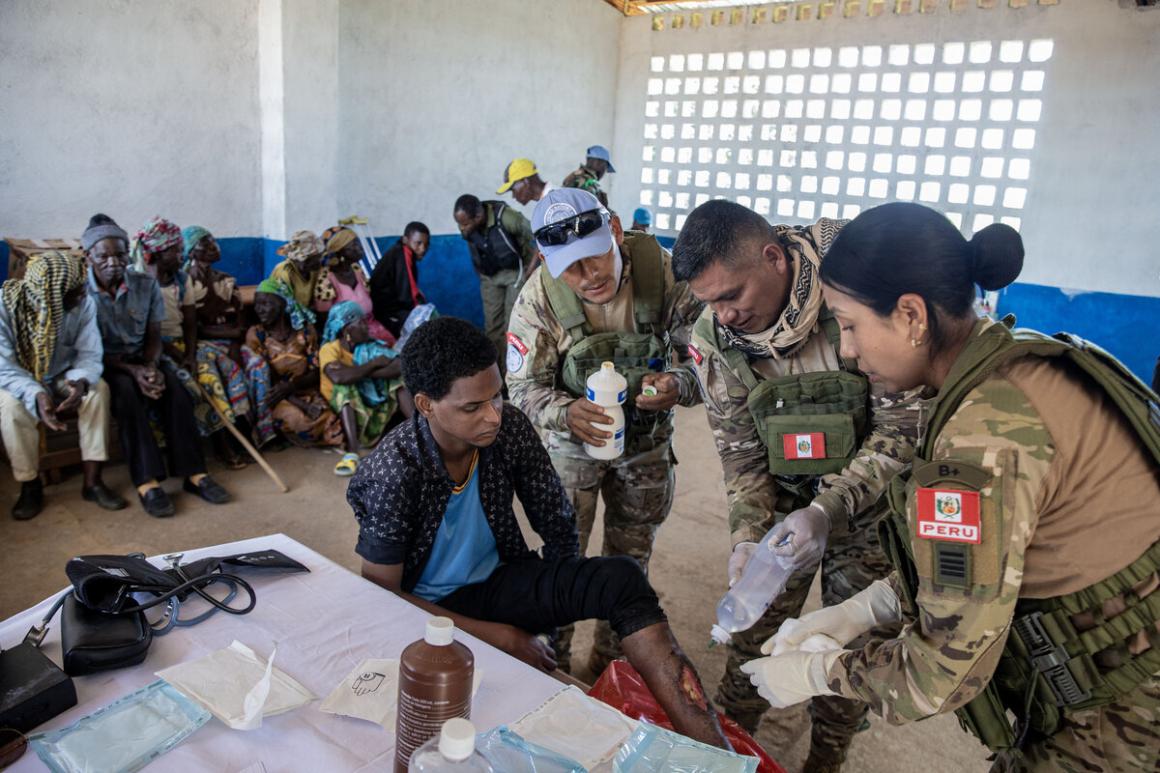
“These initiatives, ranging from direct support to disarmament and demobilization operations, educational and health assistance, to improved access to clean water, have not only reinforced MINUSCA’s security mandate, but also significantly contributed to building trust within local communities and strengthening social cohesion. These activities also helped promote the acceptance of ex-combatants within the host community in Koui,” stated MINUSCA Coordination Officer, Wilfried Relwende Sawadogo.
While individual community support initiatives may seem modest in isolation, the cumulative impact of civil-military activities by UN peacekeepers, over time, significantly strengthens the protection of civilians.
In 2025 alone, thanks to various MINUSCA contingents, 1,184 activities have been carried out for the benefit of 177,465 beneficiaries to date. Among them, 482 initiatives to supply drinking water; 171 free health care campaigns reaching nearly 18,000 beneficiaries; and 207 donations of various items, thereby providing material support to more than 26,000 people in need.
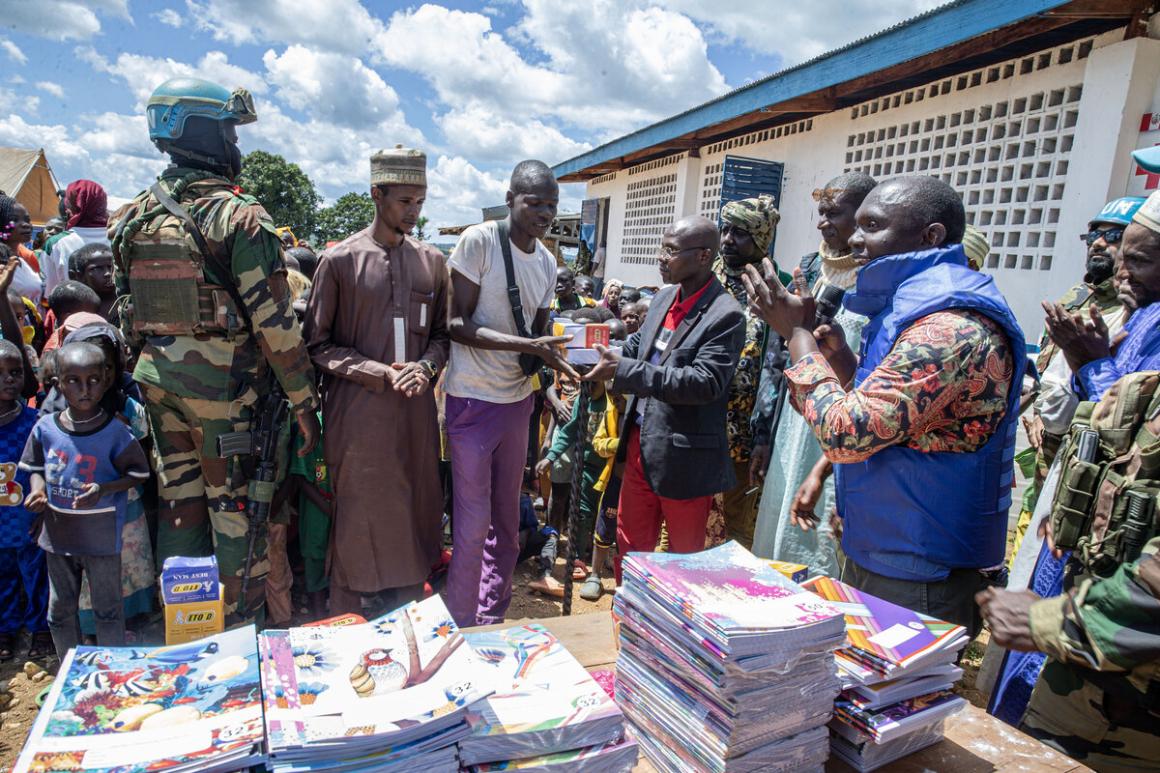
CIMIC activities also extend to community infrastructure support projects such as the rehabilitation of schools, wells, roads, and other facilities essential to the daily lives of communities, initiatives to improve skills, and campaigns specifically targeting women, conducted by female engagement teams of peacekeeping troops. Lt. Col. Fadoua Attifi, MINUSCA Force CIMIC Chief, summed up the essence of the activities: “Through cooperation, we are building peace step by step.”
Breaking barriers
For Major Tahmeed, CIMIC activities go beyond much more than the tangible benefits of individual campaigns: “No other campaign attracts such a diverse cross-section of people like civil-military campaigns do. CIMIC activities break barriers and bring us closer to the population that we are here to protect, creating opportunities for contact that military personnel would otherwise not have.”
Contact that enabled the peacekeepers to lend a hand to health, education and reconciliation alongside disarmament – small yet meaningful, enduring steps helping to cement a positive legacy in the protection of civilians.
MARIA KABATANYA


