UN
UN United Nations Peacekeeping

SAM-OUANDJA: FROM ARMED GROUP STRONGHOLD TO STATE PRESENCE AND DISARMAMENT
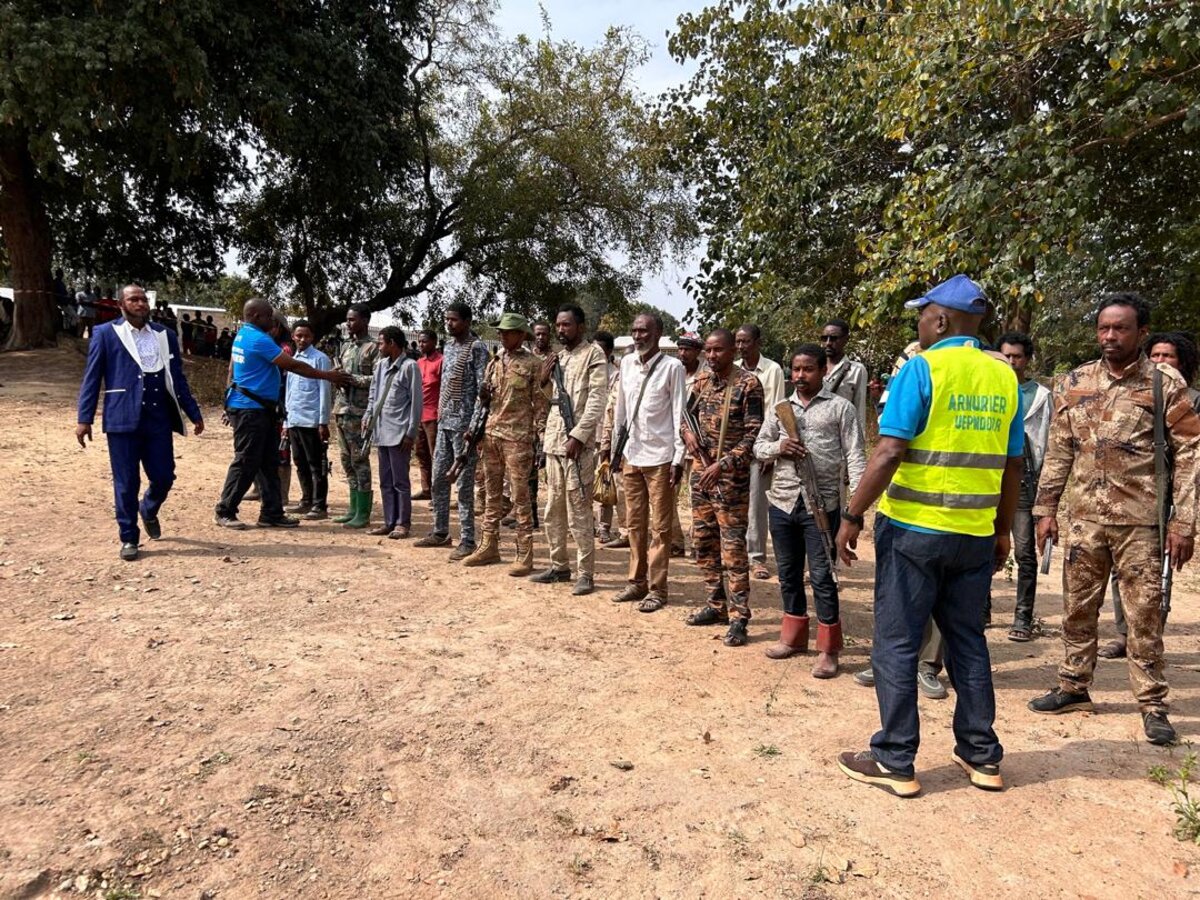
Just a few short years ago, the notion of voluntary disarmament and demobilization in Sam-Ouandja – once a thriving gold and diamond mining hub turned armed group stronghold in north-eastern Central African Republic (CAR) – seemed unimaginable. And yet, in early December 2025, disarmament became part of the region’s checkered history as armed group combatants laid down their weapons in the locality.
For disarmament and demobilization to be taking place in Sam-Ouandja is nothing short of extraordinary – capturing the significance of the operations conducted in the locality, from 9 to 10 December, demands turning back the clock to both past and more recent history.
Decades ago, Sam-Ouandja, located on the CAR frontier with Sudan in Haute-Kotto Prefecture, was renowned for its diamond and gold mining pedigree—that was before chronic conflict and strife that has spared few parts of the CAR touched the locality. For the area, also known as Ouandja-Kotto, upheaval in the CARleft in its wake an equally infamous but less illustrious legacy.
In the years following the CAR crisis, domestic and foreign combatants gradually took control of the area, turning it into a kind of no-man’s land – where armed groups reigned, and State presence was markedly absent. The population of Sam-Ouandja became consequently isolated from the rest of the CAR. This was no more apparent than in February 2023, when, after successful Force operations in August 2022 to dislodge armed groups from the area by the United Nations peacekeeping mission (MINUSCA) in line with its mandate to protect civilians, a high-level delegation co-led by the Special Representative of the Secretary-General in the CAR and Head of MINUSCA, Valentine Rugwabiza, and the Prime Minister of the Government of the CAR, Félix Moloua, conducted a landmark visit to Sam-Ouandja.
A defining moment
While the CAR Prime Minister hailed the visit as “historic” noting that it was “the first time the central Government had set foot in the locality in over twenty years”, residents of Sam-Ouandja, for their part, admitted that they had never heard of the Political Agreement for Peace and Reconciliation in the CAR (APPR) – signed four years earlier between the CAR Government and 14 armed groups – the framework for the disarmament and the demobilization process now unfolding in the locality.
“We are here to guarantee long-term security,”stated the Special Representative of the Secretary-General and Head of MINUSCA, Valentine Rugwabiza, during the momentous visit to Sam-Ouandja. She stressed that through collaborative efforts, the situation in Sam-Ouandja would steadily improve, including through the permanent return of all State institutions.
Since then, Sam-Oaundja has made up for lost time at record speed – with the support of MINUSCA, the United Nations Country Team and other partners.
In the years following the groundbreaking visit to Sam-Ouandja, MINUSCA established a Permanent Operating Base in the area to ensure the protection of civilians. The Mission has supported the restoration and extension of State authority through the deployment of local authorities, such as the sub-prefect as well as national defence and security forces and civil servants. The Mission also mobilized resources for the construction of a gendarmerie and police stations, the first-ever airstrip in Sam-Ouandja, several small bridges to facilitate movement and the security of the population; lighting up the locality with solar power; and Community Violence Reduction (CVR) and Quick Impact Projects (QIPs) to promote education, health, access and livelihoods. Sam-Ouandja has, moreover, benefitted from integrated stabilization projects from United Nations System entities and various other partners – which have resulted in the construction of schools, and a health center with a fully equipped maternity ward.
UPC and FPRC disarmed
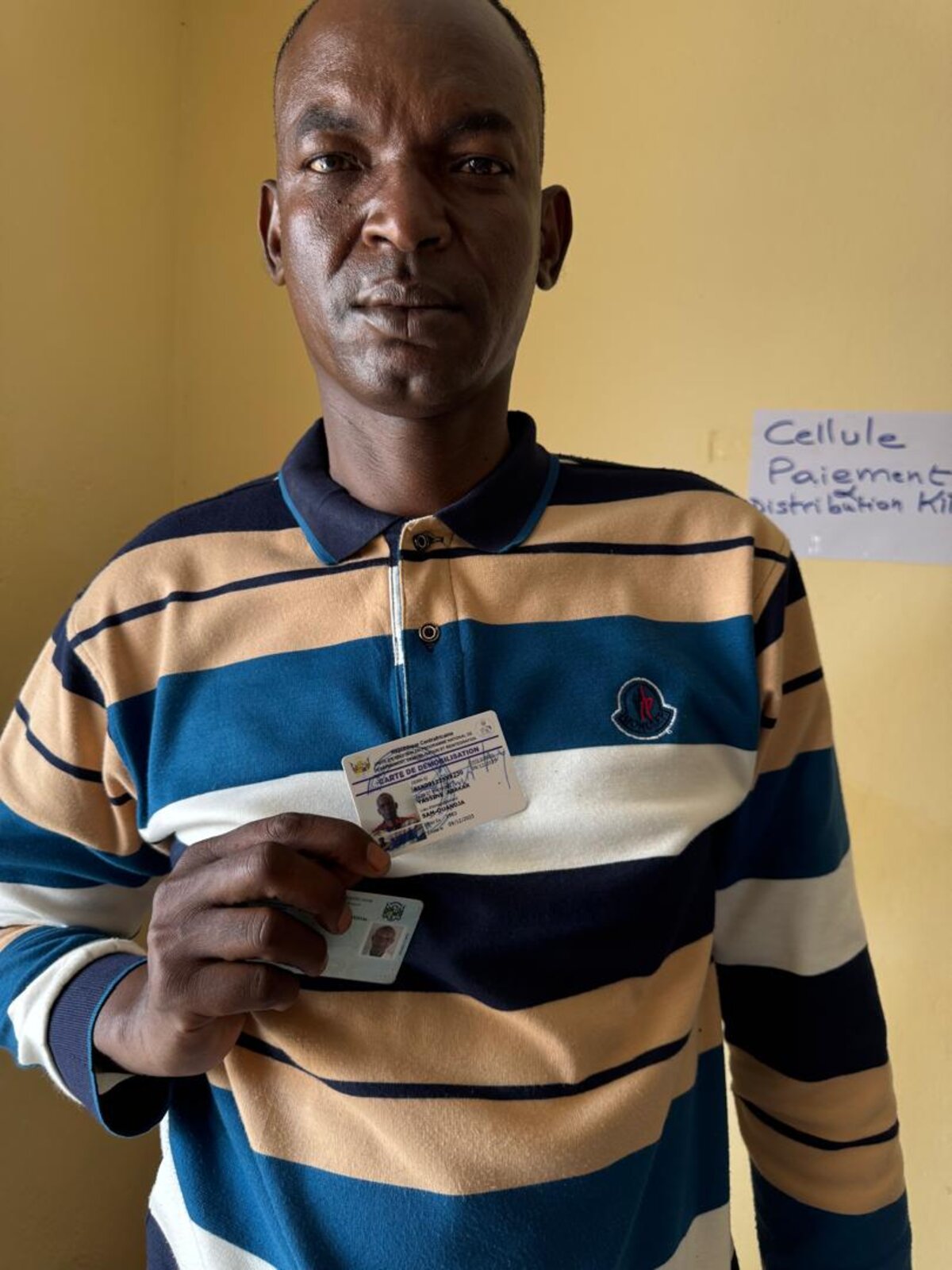
The two-day disarmament and demobilization operations in Sam-Ouandja were led by the National Disarmament Implementing Unit (UEPNDDRR), with the financial, technical, logistical and security support of MINUSCA and resulted in the disarmament of ex-combatants from the Unité pour la paix en Centrafrique (UPC) and the Front populaire pour la renaissance de la Centrafrique (FPRC).
Speaking at the launch of the operations, the Sub-Prefect of Ouandja-Kotto, Gos-Ngar Ker Kevin, commended the Government “for its policy of extending a hand to the armed groups, which allowed them to lay down their weapons, as well as the armed groups that agreed to disarm in Sam-Ouandja”.
“I heard about the disarmament process taking place here, so I came to surrender my weapon. We were part of armed rebellion before, but it brought us nothing. Now that peace has returned, I believe that other combatants still in the bush will eventually lay down their arms too,” said 49-year-old Jacoub Haroun, a FRPC ex-combatant.
Security gains ahead of the elections
Sam-Ouandja is one of several locations targeted in simultaneous voluntary disarmament operations that have seen UEPNDDRR mobile teams criss-cross the CAR, with MINUSCA support, to disarm members of several armed groups, including in locations such as Sikkikédé (Vakaga) and Pombolo (Mbomou), prior to the CAR coupled presidential, legislative, regional and municipal elections scheduled for 28 December.
Tangible improvements in the security situation in the country have been registered as armed groups are disarmed.
A new legacy
The improbable story of Sam-Ouandja— from armed group turf to disarmament site—is testament to the tangible impact of coordinated efforts to protect civilians and improve security.
It also serves as a microcosm of how United Nations peacekeeping can help transform the day-to-day lives of vulnerable populations and provide a springboard for a new legacy of peace and stability, as the one currently taking shape in Sam-Ouandja.
Sub-Prefect Gos-Ngar Ker Kevin urged the local population to make the most of the current momentum, as a platform to “build social cohesion and live together in peace, and contribute to the development of the CAR.”